


Why Educational Institutions Need a Quality Gap Analysis
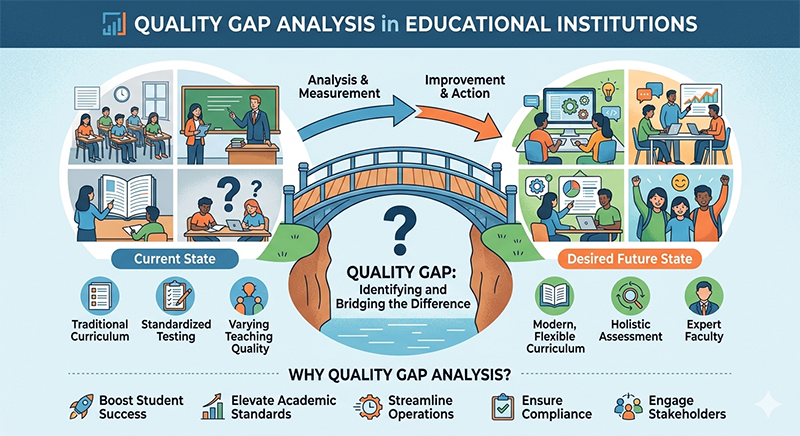
In the competitive landscape of modern education, ensuring high standards and consistent quality is not just a goal; it's a necessity. Students, parents, and accrediting bodies are all demanding more from educational institutions. One of the most effective tools to meet these demands and drive continuous improvement is a Quality Gap Analysis.
This process allows institutions to identify the discrepancies between their current performance and their desired goals, providing a clear roadmap for enhancement..
- By identifying gaps in curriculum design, teaching quality, and assessment methods, institutions can elevate the level of education they provide
A Quality Gap Analysis in an educational context is a structured process of comparing an institution's current state with its desired future state, based on a set of defined quality standards. This "gap" represents the area where the institution is not meeting its objectives, whether they are related to academic performance, student services, or administrative efficiency. The primary goal is to identify these gaps and develop strategies to close them, thereby improving overall institutional quality and effectiveness.

Benefits of conducting a Quality Gap Analysis.
By identifying gaps in curriculum design, teaching quality, and assessment methods, institutions can elevate the level of education they provide.
Importance of a Quality Gap Analysis in Education
- Improved Academic Standards
- Enhanced Student Experience
- Streamlined Operations
- Accreditation and Regulatory Compliance
- Strategic Planning and Resource Allocation
A Quality Gap Analysis is a powerful tool that can help educational institutions to systematically identify, analyze, and address the factors that hinder their pursuit of excellence. By committing to this process, institutions can cultivate a culture of continuous improvement, enhance student success, and ensure their long-term sustainability in a dynamic and demanding educational landscape.
The investment in conducting a rigorous Quality Gap Analysis is a strategic move that can pay substantial dividends in terms of improved academic quality, enhanced student experience, and a stronger institutional reputation.
Leave a Reply